
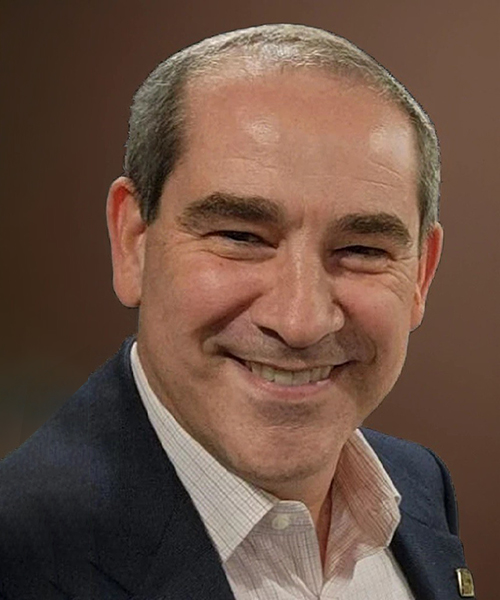
At QGEMS, Shawn helps shape the company's market architecture, interoperability strategy and distributed systems design — ensuring the platform is engineered not simply as software, but as infrastructure capable of coordinating millions of energy assets in real time. His work sits at the intersection of grid modernisation, distributed energy resources, AI-driven orchestration, utility interoperability, blockchain-enabled settlement, smart city infrastructure, transactive energy systems and digital infrastructure markets.
The future energy system is not a centralised machine. It is a continuously coordinated network of intelligent participants.Shawn Chandler
A recognised leader in grid architecture and interoperability.
Shawn serves on the U.S. Department of Energy's GridWise Architecture Council (GWAC) — one of the most influential advisory bodies focused on the future architecture of the electricity system. GWAC was established by the U.S. Department of Energy to accelerate interoperability standards and architectural principles for the modern grid.
GWAC's mission centres on enabling decarbonised electricity systems, distributed grid coordination, interoperable infrastructure, real-time energy participation and market-based grid architectures. These principles align directly with the QGEMS operating-layer thesis — that distributed energy systems require a software-defined coordination architecture capable of operating continuously at network scale.
Standards development at the centre of the field.
Shawn has held multiple senior leadership positions across IEEE initiatives focused on smart grids, interoperability and intelligent infrastructure systems. He has served as Chair of the IEEE PES Smart Buildings, Loads and Customer Systems Technical Committee (2015–2019), past Chair and Steering Committee contributor for the IEEE Smart Cities initiative, Associate Editor of the IEEE Internet of Things Magazine, and Senior Member of IEEE.
His standards work has focused on DER coordination, smart-grid interoperability, blockchain-enabled energy systems, IoT-enabled grid participation, distributed market architectures, energy transaction systems and transactive energy frameworks. This experience directly informs QGEMS' architecture for utility integration, asset orchestration, market participation, settlement integrity and distributed trust.
Six pillars. One systems thesis.
Grid architecture & interoperability
Member of the U.S. Department of Energy's GridWise Architecture Council, shaping the interoperability standards and architectural principles that will define the future of the electricity system.
IEEE standards leadership
Past Chair of the IEEE PES Smart Buildings, Loads and Customer Systems committee. Active across IEEE Smart Cities, the IEEE World Forum on Smart Cities, and the IEEE Internet of Things Magazine editorial board.
Blockchain for energy
Chair of the IEEE P2418.5 Blockchain for Energy Interoperability Taskforce — one of the industry's leading initiatives on how distributed ledger systems can support energy transaction integrity, distributed trust frameworks and settlement interoperability.
Smart cities & convergent infrastructure
Contributing across the U.S. Congressional Smart Cities Caucus, National Governors Association Smart States initiatives, and IEEE World Forum on Smart Cities. Recognised early that energy, communications, buildings, transport and digital systems were converging into a single interoperable urban stack.
AI & intelligent grid systems
An early advocate for AI-driven energy coordination. His systems view — billions of controllable endpoints, autonomous coordination, continuous optimisation engines, distributed intelligence frameworks — aligns directly with GemAI's design.
Utility transformation
Senior leadership roles at Capco, Guidehouse, Navigant and GridCure, delivering programmes across real-time utility systems, intelligent infrastructure, predictive analytics, DER orchestration, market participation and utility transformation strategy.
The financial record of the energy system, built into the system itself.
Shawn's IEEE P2418.5 work focuses on energy transaction integrity, distributed trust frameworks, settlement interoperability, transparent market coordination and secure decentralised infrastructure. The underlying principle mirrors QGEMS' trust architecture: the financial and operational record of the energy system should be generated continuously as part of operation itself — not reconstructed afterwards through audits and manual reporting.
That principle is foundational to decarbonization finance, asset underwriting, carbon attribution, institutional reporting and infrastructure-grade assurance. It is also the reason QGEMS treats settlement, audit and reporting as core platform layers rather than features.
Interoperability is not a feature. It is infrastructure.
A central theme across Shawn's career is that interoperability is not a feature — it is infrastructure. Distributed systems only scale when data architectures align, standards interoperate, trust frameworks integrate, coordination latency reduces, and market systems communicate seamlessly.
This philosophy underpins QGEMS' architecture: a composable operating layer connecting utilities, asset owners, capital providers and distributed infrastructure participants through a shared coordination substrate.
The modern grid will not be coordinated through isolated systems. It will operate through interoperable digital architectures functioning continuously at machine speed.Shawn Chandler
Foundational work in the public record.
Shawn's work appears across the IEEE record, including his 2026 keynote "The Anti-Fragile Grid: Beyond Resilience — DER Orchestration" at IEEE T&D — the canonical industry venue for transmission and distribution standards. The deck synthesises the engineering principles behind anti-fragile grid operation: standards-grade interoperability (IEEE 2418.5, IEEE 2030.5, IEC 61850, BACnet, FERC 2222), three exchanges on one record (information, service, financial), and continuous coordination across utility, market, customer and environmental domains. It is one of the foundational documents underneath the QGEMS engineering architecture.
At the intersection of utilities, markets and intelligent infrastructure.
Shawn strengthens QGEMS at the intersection of utility modernisation, digital infrastructure, distributed energy markets, institutional-grade interoperability, AI-enabled orchestration, blockchain-enabled settlement, smart city infrastructure and network-scale systems coordination. His work reflects the same structural insight underpinning QGEMS itself: the energy transition is becoming a digital systems architecture challenge as much as an energy challenge.